
Why Institutional Risk Hides in Plain Sight Across Higher Education



Risk Visibility for Every Leadership Lens
Meyestro helps institutional leaders answer key risk questions specific to their areas of responsibility.

Presidents and Chancellors
What are the material risks to the mission and values of the institution and the interests and wellbeing of its constituents? Do the right teams have the right information and tools to see and manage these risks?
Chief executives need an enterprise view of emerging risks in the human-behavior-centric areas that have given rise to the gravest risks confronting higher education and the state of the institution's response to these risks.

Risk and Compliance Leaders
Where are patterns forming across the institution?
Risk and compliance leaders need visibility as early as possible into emerging risk, recurring concerns, compliance lapses, readiness gaps, and areas where risk may be crossing functional boundaries.

General Counsels
What did the institution know, when did it know, and what happened?
General counsels need rigorous data and context to confidently evaluate claims and exposure and set legal strategy, a system to respond efficiently and accurately to data requests and subpoenas, and a means to identify and protect privileged materials.
CIOs
Where is system fragmentation creating risk?
Technology leaders need to support secure, scalable infrastructure that reduces fragmented systems while preserving privacy, access controls, and appropriate data governance.

Finance Leaders
What is the cost of risk and how can it be reduced?
Finance leaders need visibility into the total cost of institutional risk, including workload strain, resource pressure, legal exposure, insurance implications, effects on institutional integrity and long-term stakeholder confidence, and downstream financial impact.

Provosts, Deans, HR/ER, and Student Affairs Leaders
What risks are emerging within my domain or crossing into others?
Academic, people, and student-facing leaders need to understand trends affecting culture, workload, fairness, care, conduct, and operational consistency.
Scenario: Separate Reports Begin to Reveal a Larger Risk Pattern
A university sees several reports that appear unrelated over the course of a month. Residence Life receives concerns about repeated alcohol-related incidents in one residence hall. Student Affairs opens conduct matters tied to the same student organization. Campus Safety receives reports connected to late-night activity near the same area of campus. A Civil Rights matter also raises questions about whether some students are being targeted or excluded.

Meyestro gives authorized leaders the context to understand what is happening, where attention is needed, and how teams are responding. Risk and compliance leaders can see that multiple offices are managing matters connected to the same organization, residence hall area, and event pattern over a relevant period of time.
That visibility can prompt earlier leadership review, additional safety planning, tightly coordinated oversight, targeted student outreach, policy reinforcement, or staffing support before the situation escalates. Permission-based guardrails ensure the institution can identify connected risk while still protecting sensitive information and departmental responsibility.

Each office addresses the matters within its own process and system. Because the information is fragmented, leadership may not realize the same student organization, location, and event patterns are appearing across multiple areas. The university may see the connection only after a serious incident occurs, complaints escalate, or external scrutiny begins to question whether earlier warning signs were missed.
From Risk Visibility to Coordinated Response
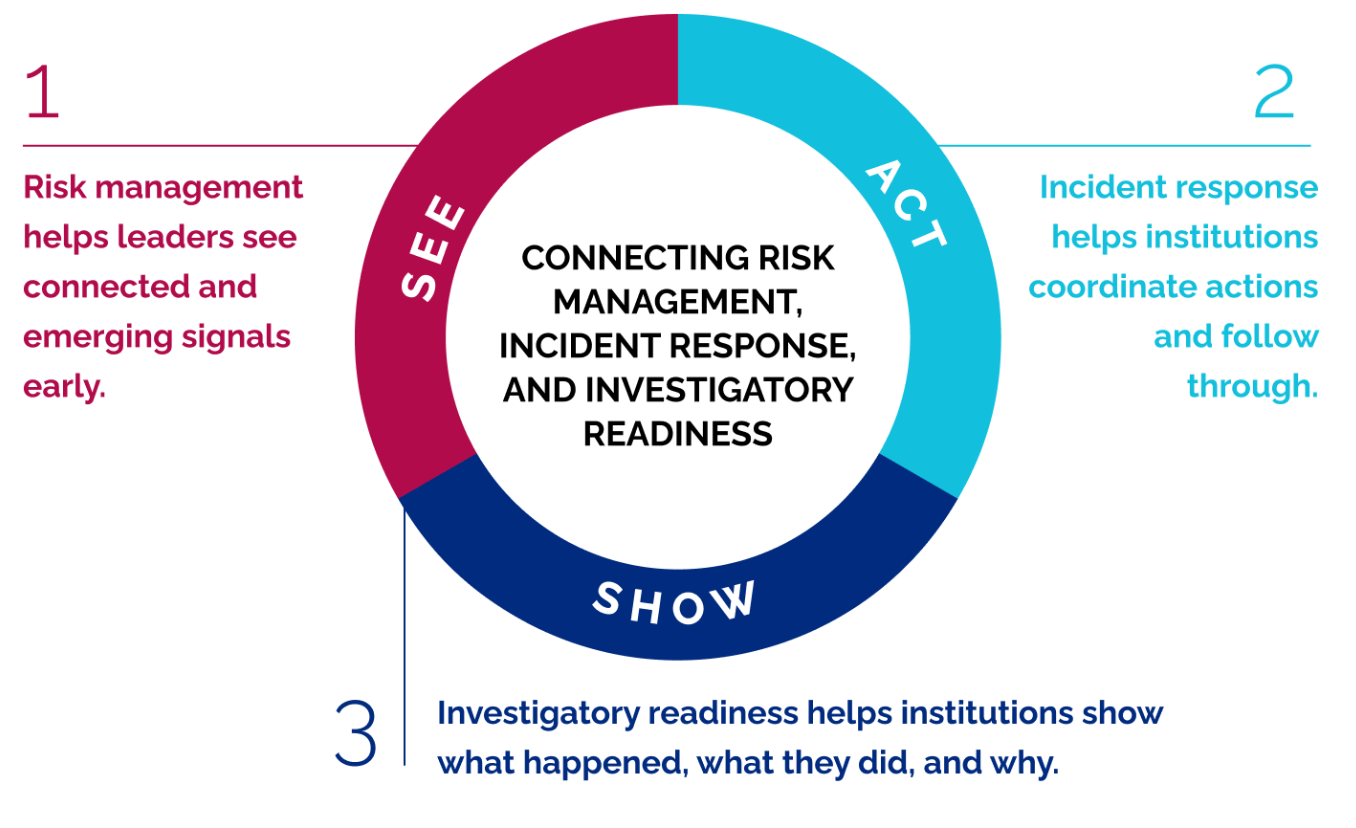
When emerging risk becomes an active institutional matter, visibility must turn into coordinated action. Explore how Meyestro supports consistent, documented incident response across sensitive matters, leadership roles, and institutional teams.
Connect Risk Awareness to Response
Also Explore: Investigatory Readiness

Where Compliance Meets Care™
Meyestro helps universities harmonize expert risk management, efficient compliance, and demonstrable care.